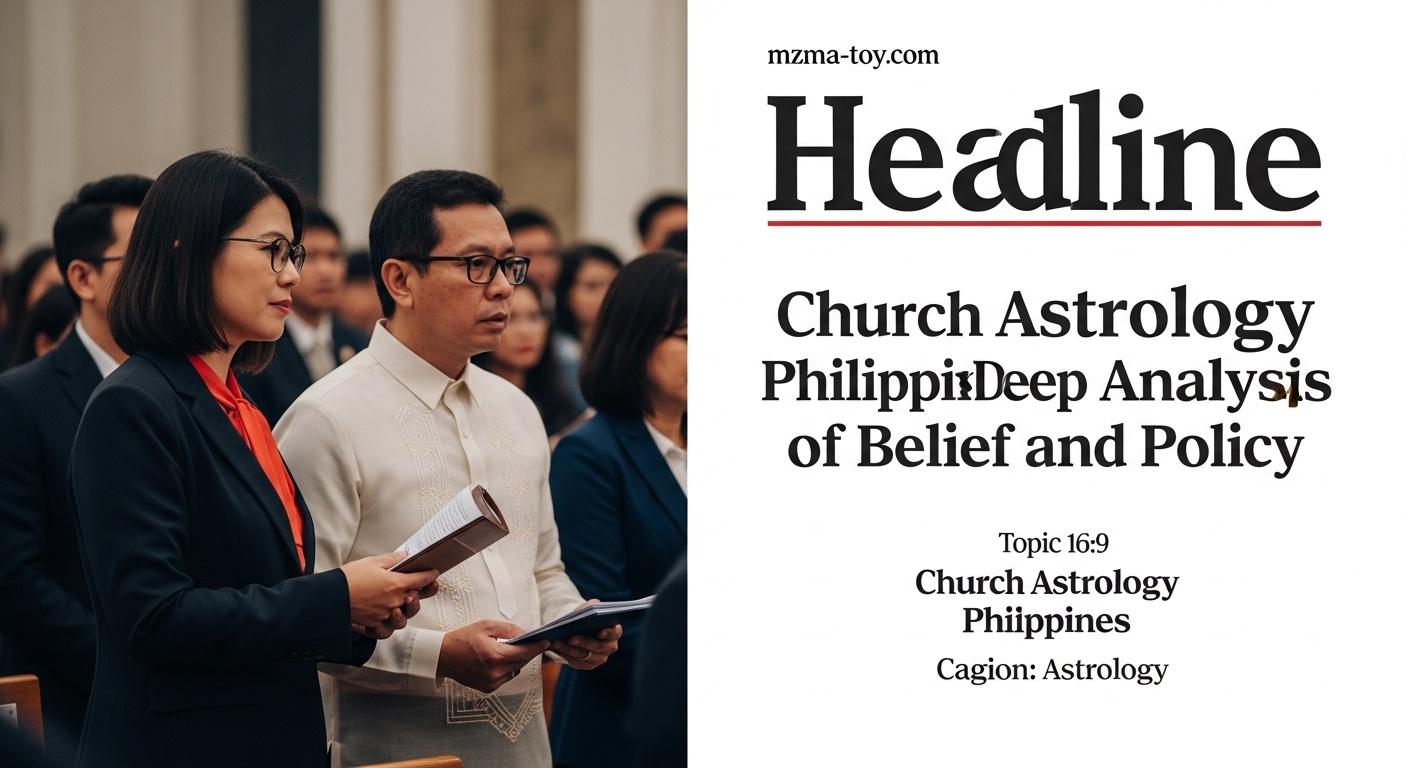
Across the Philippines, astrology content has shifted from a private pastime to a pragmatic lens for understanding uncertainty, social change, and global events. In this analysis, the keyword hillary Astrology Philippines is used as a case study to explore how search trends, online communities, and media narratives merge in local discourse. By tracing how readers encounter celestial forecasts alongside headlines, we can map causal links between digital signals and everyday decisions—from how households plan their time around political cycles to where small businesses choose to advertise. This piece treats the term as a window into a broader pattern: astrology expanding from personal reflection into a practical, data-informed toolkit for interpreting a rapidly evolving environment in the Philippines.
Context and Signals
The Philippine online ecosystem hosts a vibrant mix of traditional horoscopes, celebrity astrology, and regionally resonant micro-niches. When a term like hillary Astrology Philippines surfaces in search or social feeds, it is rarely about a single belief system; it is about how audiences process complexity. Global events, entertainment trends, and political headlines circulate in a way that makes astrology feel like a shared language for translating uncertainty into personal actions. The signal here is not a forecast alone but a pattern: people use planetary cycles to time decisions, from budgeting a family vacation to scheduling a school project or a business launch. In that sense, the term acts as a heuristic that binds online behavior to everyday realities in the Philippine context.
Market and Media Dynamics
The ascent of astrology content in the Philippines is tightly coordinated with media ecosystems and search behavior. Content creators optimize for local search intent by blending traditional astrological explanations with culturally salient references—folk practices, religious calendars, and community rituals—creating a hybrid discourse that resonates with diverse audiences. Algorithms reward timely, locally relevant material, which means a trending keyword like hillary Astrology Philippines can spark a cascade: an initial post, a wave of comments, translated summaries, and a batch of companion videos or posts in regional languages. This dynamic is practical: readers gain quick, actionable signals, while publishers monetize attention through subscriptions or micro-services that promise personalized readings. Yet it also demands scrutiny, since amplification can blur lines between informed commentary and sensationalism when the aim shifts from insight to engagement.
Culture and Community Interpretation
Philippine culture prizes community, family, and shared storytelling. Astrology, treated as a cultural tool, helps people frame personal experiences within broader narratives—whether addressing work, love, or health. In online spaces, interpretation ranges from pragmatic horoscopy—predictive guidance tied to daily routines—to reflective discourse about character and destiny shaped by planetary alignments. The keyword hillary Astrology Philippines serves as a focal point around which communities discuss authority, credibility, and epistemology in astrology. This collaborative sense-making is not monolithic: urban readers may lean toward neo-astrological analyses with data-backed cautions, while rural audiences might favor intuitive readings tied to local events. The result is a layered, dynamic discourse that blends science-oriented caution with symbolic meaning, adapted to regional realities and diasporic connections.
Policy, Ethics, and Skepticism
With growing reach comes ethical responsibility. Astrological content must navigate misinformation risks, especially when readings touch on finance, health, or politics. Journalists and educators should emphasize transparency about methods, avoid definitive or deterministic claims, and clearly separate opinion from verifiable information. In the Philippine context, where media literacy varies by region and language, creators have a duty to contextualize astrology within critical thinking and to provide disclaimers about entertainment value versus empirical evidence. The sustainable path forward blends curiosity with a commitment to accuracy, encouraging audiences to view astrology as a reflective tool rather than a substitute for professional advice.
Actionable Takeaways
- Journalists and editors: clearly label astrology content as interpretive analysis and avoid presenting it as fact-bound science. When covering trends linked to keywords like hillary Astrology Philippines, cite sources and acknowledge uncertainties.
- Educators and platforms: promote media literacy that helps readers distinguish between horoscopic guidance and verifiable information. Provide context on how trends emerge in search data and why interpretation varies.
- Content creators: balance engaging narratives with responsible claims, offer disclaimers when readings are speculative, and diversify formats to include explainers, how-to guides, and audience Q&As.
- Policymakers and consumer groups: monitor the spread of mis- and disinformation in popular astrology content, especially when it intersects with consumer behavior or health advice; support clear labeling and fact-checking mechanisms.
- Researchers and analysts: study the path from global keywords to local interpretation, documenting how community norms shape the reception of astrology content in different Philippine regions.
- Audience members: approach astrology readings as personal narratives that can guide reflection and planning, but corroborate with diverse sources and professional guidance when decisions carry risk.
Source Context
For readers seeking context on related media coverage and public discourse, the following sources illustrate how widely divergent topics can appear in similar information ecosystems: