
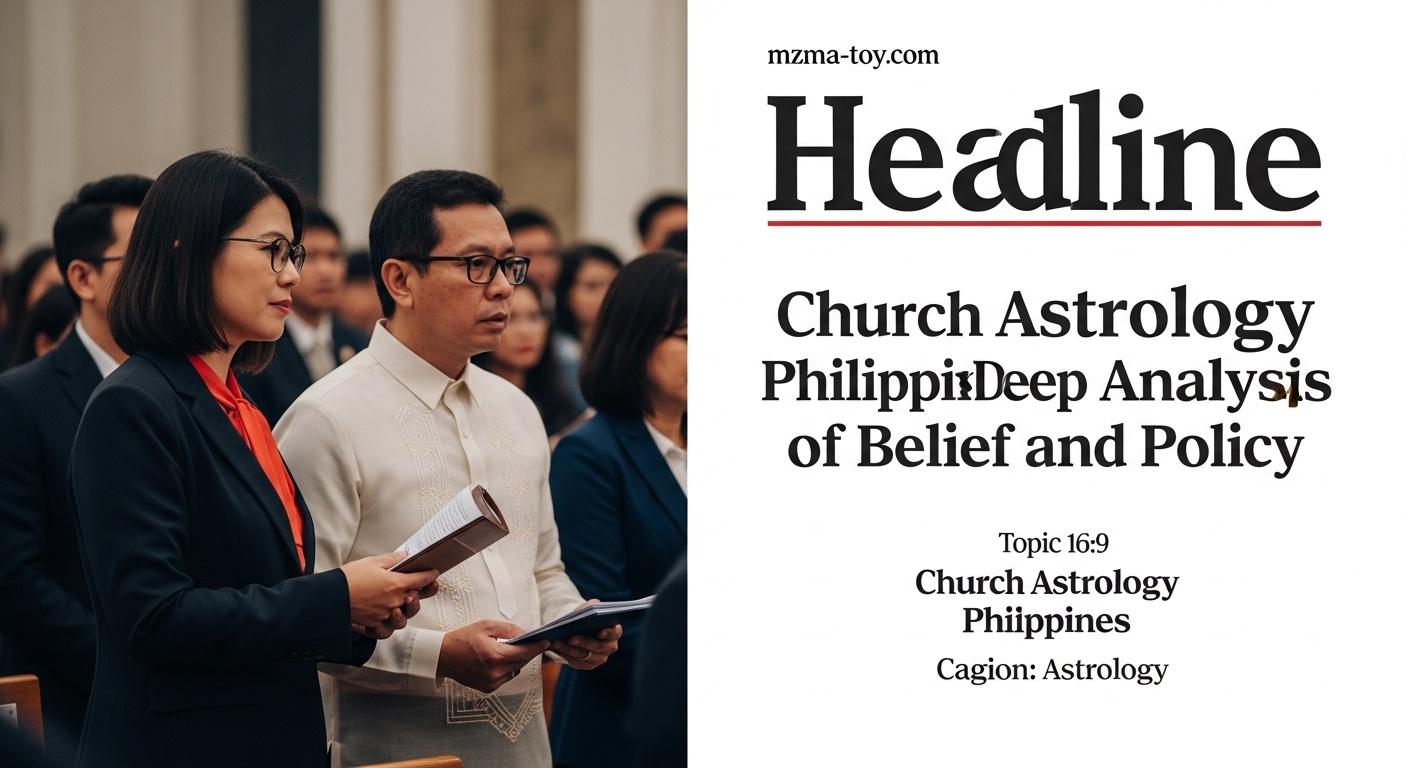
Philippine church with astrology imagery overlay
Updated: April 8, 2026
In the Philippines, the phrase church Astrology Philippines has surfaced in classrooms, church halls, and social feeds, signaling a growing curiosity about how celestial timing sits alongside faith in daily life. This is not a purely academic exercise: it shapes conversations in parishes, on campus, and within online communities where belief meets personal identity, especially as digital platforms blur lines between mysticism, science, and religious practice.
Context and Tension
The Philippines has long been a country shaped by a strong religious imprint, with Catholicism forming a foundational social framework. Astrology exists here not merely as a hobby but as a companion for life decisions, from education and career to relationships and community events. In recent years, social media algorithms have amplified astrology content, turning horoscopes and star charts into accessible language for many who would not otherwise engage with esoteric ideas. This growth did not come with a uniform religious consensus; rather, it has produced a spectrum of responses from cautious curiosity to ideological critique. Some church communities emphasize discernment—urging parishioners to test astrology against shared moral teachings—while others treat astrology as a cultural artifact that can coexist with faith, provided it does not replace core spiritual commitments.
The tension can be read as a broader question about authority in the public square: who or what should guide life decisions when both traditional religious authorities and modern, data-driven narratives claim relevance? A recent public memory in the Philippines—marking peaceful social milestones and recalling moral leadership—illustrates how collective memory intersects with contemporary belief practices. In this frame, church Astrology Philippines functions less as a doctrinal stance and more as a social signal about how people relate to time, fate, and community guidance in a rapidly changing media landscape.
Religious Belief vs Astrological Practice
Astrology here often occupies a liminal space: it can offer personal meaning without claiming universal authority, and it can also threaten to overshadow established moral frameworks if readers substitute celestial guidance for religious discernment. Observers note that many Filipinos maintain a dual approach—seeking spiritual assurance through prayer while consulting star-based calendars for practical planning. This duality invites careful scrutiny: how should faith communities respond when astrology becomes a shared cultural language among laypeople, students, and younger generations?
The practical question is not whether astrology exists in public life, but how churches contextualize it. Do leaders present astrology as a complement to faith, a cautionary tale, or a neutral cultural practice? The answer shapes how believers navigate risk assessment, decision-making, and community expectations. In some settings, church leaders may encourage critical thinking and ethical reflection, insisting that spiritual guidance remains the anchor even as people explore astrological ideas in daily life. In others, concern about misinformation can push communities toward clearer boundaries, particularly around predictions that claim to foretell specific outcomes.
Economic and Social Impacts in the Philippines
Beyond private belief, astrology has economic and social footprints. Local practitioners offer readings, workshops, and digital content that attract diverse audiences, including students and young professionals seeking inexpensive tools for planning. This market interacts with existing religious and educational ecosystems: bookstores, campus clubs, and faith-based groups may host discussions that blend spiritual reflection with astrological perspectives. When persuasion meets commerce, consumers must navigate credibility, costs, and the perceived value of guidance. The risk, in turn, is not only financial but epistemic: when celestial timing becomes a dominant heuristic for life choices, there is a chance that critical examination of evidence and sources is deprioritized.
This dynamic also bears on social equity. Access to astrology services can differ by urban-rural divides, digital access, and educational background. Communities with limited exposure to scientific literacy may rely more heavily on astrological narratives to make sense of uncertain circumstances. Conversely, urban centers with robust media literacy programs may foster more nuanced dialogues where astrology is discussed as cultural expression rather than definitive fate.
Policy and Public Discourse
Public discourse around church Astrology Philippines intersects with questions of truth claims, consumer protection, and media responsibility. Policymakers and educators have an interest in ensuring that astrology content does not mislead vulnerable individuals or patriarchal structures from exploiting beliefs for profit or influence. In practice, this means promoting transparent sources, clear distinctions between faith-based guidance and predictive claims, and accessible avenues for critical inquiry. Catholic and evangelical communities often advocate for discernment, encouraging believers to test any external guidance against core moral teachings and reputable information sources. In this light, policy considerations might include media literacy education, accountability for paid endorsements, and consumer protections for astrology-related services that promise guaranteed outcomes.
Scenario planning helps illuminate potential futures. If mainstream institutions embrace astrology as a permissible cultural practice while maintaining theological boundaries, communities could experience richer dialogue and shared rituals that incorporate contemporary interests. If, however, misinformation proliferates or commercial actors obscure the limits of astrology, public trust in both religious and scientific institutions could erode. The challenge for leaders is to foster spaces where curiosity thrives without compromising commitments to truth, dignity, and communal responsibility.
Actionable Takeaways
- Approach church Astrology Philippines as a cultural phenomenon that intersects faith, science, and media literacy, not as a substitute for doctrinal teaching.
- Verify astrological claims with credible sources and distinguish between guidance rooted in faith and predictions rooted in celestial interpretation.
- Religious communities should articulate clear boundaries that preserve core spiritual practices while allowing open, respectful dialogue about astrology.
- Educators and media practitioners should promote critical thinking and fact-based discussion when astrology enters public debates or school settings.
- Policymakers and consumer groups should consider guidelines that protect against misleading astrology endorsements and ensure transparency in paid content.
Source Context
- Cardinal Sin anniversary coverage — Catholic World Report
- US military plane incident in the Philippines — Newsradio 600 KOGO
- Bloomberg: Philippines gas project stance — Bloomberg